

A person packing an order into a cardboard box at a desk with a laptop.

Home · Industries · E-commerce

E-commerce

Online growth hides a simple question: which orders actually make money? Armstrat is a Business Transformation Office (BTO™) that deploys integrated teams inside e-commerce businesses, working with founders, owners and CEOs on outcomes agreed at the start: price every order against its full cost, fix fulfillment and returns, and stay until the margin holds.

Who we work with
Direct-to-consumer brands, marketplace sellers and retailers whose online channel now carries a large share of revenue.
What we fix
Order economics, fulfillment and freight, returns, the systems behind the store, and the operating model behind growth.
How we work
Embedded delivery. Our team works inside yours, builds the change with your people, and stays until the results hold.
How we are measured
By agreed outcomes. A base fee plus a contingency paid on results, not on documents.
How it starts
A diagnostic of two to four weeks that agrees the outcomes to move.

Updated

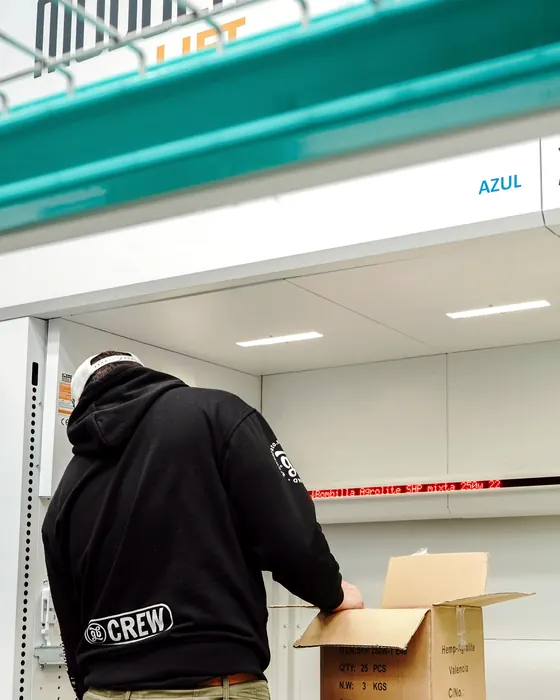
A fulfillment worker preparing a box beside an automated storage system.

Revenue is easy to see. Margin is not.

Every order carries freight, fulfillment, payment, advertising and return costs that rarely sit in one report.

Where Armstrat helps e-commerce businesses

  • 01

    Order economics

    Price every order against its full cost: product, freight, fulfillment, payment fees, advertising and expected returns.

    • Contribution margin per order, product and channel
    • Shipping thresholds and pricing that protect margin
    • Advertising spend judged on profit, not revenue
    Growth, marketing and sales
  • 02

    Fulfillment and freight

    Ship from the right place at the right cost, with delivery promises you can keep.

    • Carrier contracts and rate shopping
    • In-house fulfillment or a 3PL, decided on numbers
    • Inventory placement across warehouses and marketplaces
    Operations and supply chain
  • 03

    Returns and customer experience

    Treat returns as a designed process with a cost, not a back-room problem.

    • Return policy and reason-code discipline
    • Triage, restock and resale routes
    • Service workflows that resolve issues the first time
    Operations and supply chain
  • 04

    Systems and the operating model

    Growth stalls when the storefront, the warehouse and finance run on different numbers, and every decision waits on the founder.

    • One product, order and inventory record across systems
    • Clear owners for merchandising, operations and growth
    • A weekly rhythm on a few numbers
    People and organization

We stay until the results hold.

Two commitments shape every Armstrat engagement in e-commerce.

Integrated teams

Consulting firms hand over a plan. We deploy an integrated team inside your e-commerce business, build the change with your people, and stay until it runs without us.

  • Senior people inside your team, not a slide deck
  • Processes, systems and roles built, not just recommended
  • A handover your team can run on its own

Outcome-driven engagements

Every engagement starts by agreeing the outcomes to move and how they will be measured. A base fee covers delivery. A contingency is paid on results, not on documents.

  • Outcomes and measures agreed before work starts
  • Progress reported against those numbers
  • Fees tied to results, not to reports
A woman paying for an online order with her phone and a bank card.
Every order is a small P&L.

Where AI earns its place in e-commerce

AI is one tool, not the strategy. It helps where the data is clean and the decision repeats. In e-commerce, we look here first.

  • Customer service on order questions

    Where is my order, returns and policy answered instantly from live order data, with a handoff to people.

  • Product content and search

    Titles, attributes and descriptions drafted at scale, so products are found on your site and on marketplaces.

  • Demand and inventory planning

    Forecasts by product and location that update with every sale, once the catalog and order history are clean.

  • Fraud and return abuse signals

    Risky orders and serial returners flagged for review, with people making the final call.

Honest enough to say not yet.

Some of the most valuable advice in e-commerce is what not to build yet.

Read the five signals that mean not yet
  • No AI chatbot on top of bad order data.If the system does not know where the order is, neither will the bot.
  • No new platform to fix a process problem.Replatforming rarely fixes margin. We fix the process first, then choose the tools.
  • No growth spend before unit economics hold.Scaling orders that lose money only makes the loss bigger.

Selected work

Client names withheld, results as measured.

A courier loading parcels into the back of a delivery van.
Case study · E-commerce · Operations18%

Supply chain restructure for a multi-channel retailer

Situation
A $120M retailer sold across six channels on fragmented freight contracts, with no unified view of inventory. Operational drag compounded at every layer as the business scaled.
What we did
We restructured the supply chain around its two root problems, the freight contracts and the missing inventory view, and carried the work through implementation.
Result
An 18% freight-cost reduction and $280K in annualized savings within six months of implementation.

Read the full case
A founder packing a large order in a bright studio.
Case study · Consumer products · Org design$18M

Operating model redesign for a scaling DTC brand

Situation
A founder-led DTC brand had reached $8M ARR and hit a ceiling. Every decision ran through one person, and the business could not grow past that.
What we did
We redesigned the operating model around accountable leaders instead of one decision-maker: who owns each part of the business, and who decides what.
Result
Founder involvement fell from 35+ hours a week to under 10. Revenue scaled from $8M to $18M within 14 months.
Read the full case

Questions leaders ask about e-commerce

How do you make an e-commerce business more profitable?

Price every order against its full cost and fix what erodes it. At Armstrat that means pricing every order against its full cost, fixing fulfillment, freight and returns, connecting the storefront, warehouse and finance systems, and adding AI where it pays. Our integrated team designs the change and builds it with yours.

How is a Business Transformation Office different from a consulting firm?

A consulting firm usually hands over recommendations. Armstrat is a Business Transformation Office (BTO™): it deploys an integrated team inside your e-commerce business, builds the change with your people and stays until the results hold. Every engagement is scoped around agreed outcomes, with a base fee plus a contingency paid on results, not on documents.

How can AI improve e-commerce operations?

AI improves e-commerce operations where the data is clean and decisions repeat: customer service on order questions, product content at scale, demand and inventory planning, and fraud or return abuse signals. Armstrat checks the order, product and inventory data first, and says not yet when the foundations are not ready.

Should an e-commerce business use a 3PL or run its own fulfillment?

It depends on order volume, product mix, delivery promises and how much control you need. Armstrat models the full cost of each option, including freight, labor, space, returns and errors, then helps you run the choice. Many businesses use both, split by product or region.

How does an engagement with Armstrat start?

Most engagements start with a diagnostic of two to four weeks. Armstrat maps order economics, fulfillment and returns, then agrees the few numbers to move before anything is built. You can also start with the free AI Readiness Assessment, which takes about ten minutes.

Find out which orders make money.

Tell us what is stuck. We will tell you plainly where we can help, and where we cannot.