
Home · Work · Retail and consumer goods
A dealership turned about 7,705 past service visits into reachable customers
An authorized dealership had about 7,705 service visits on record but about 40 contactable customers. Working inside the business, Armstrat built its own customer platform and a plan to double EBITDA without new capital.
- Client
- An authorized automotive dealership covering sales, service and spares, co-owned and trading since 2023
- Engagement
- Growth strategy to double EBITDA within 9 to 12 months without a major capital injection, plus design, build and production rollout of a dealer-owned customer platform
- Result
- About 7,705 past service visits turned into a contactable customer base, up from about 40 records; about 75% of recommended platform capability live by mid-2026
- How we worked
- On site with the owner, manager and head mechanic; finances rebuilt from source documents; platform designed, built and deployed by Armstrat; every recommendation judged against the agreed EBITDA target
Published . Client name withheld.
The situation
The client is an authorized automotive dealership covering sales, service and spares, trading since 2023. It is co-owned and run day to day by a dealership manager. Revenue comes from three streams: new vehicle sales, service, and spare parts, with parts carrying a margin of about 25%. The business was profitable and generated cash, but growth was constrained, and capital was the scarcest resource it had.
The owners asked Armstrat how to increase EBITDA. We set the engagement question as doubling EBITDA within 9 to 12 months without a major capital injection. The obstacle was data as much as money. About 7,705 service visits had been recorded since 2023, yet the dealership held only about 40 contactable customer records. It could not identify, segment or reach its own customers.
What made it hard
- Capital was the scarcest resource, and dealership growth conventionally consumes it: more units on the floor, more parts on the shelf, more financed inventory. That playbook was wrong for this balance sheet.
- The real profit engine was after-sales, repeat service labor plus parts margin. After-sales is a retention business, and retention needs a customer database the dealership did not have.
- The manufacturer’s dealer management system had usability, automation and integration gaps, was barely used, and could not be configured by the dealer. It had no documented API, and its published documentation was wrong on at least one field.
- There was no customer outreach and no marketing capability: no service reminders, no campaigns, no managed online presence. Free-service coupons issued with every new vehicle were reimbursed on paper, and the buyer behind each one was never captured.
- The team had limited system experience. A more sophisticated tool would not have been used, so anything we built had to tell staff what to do next.
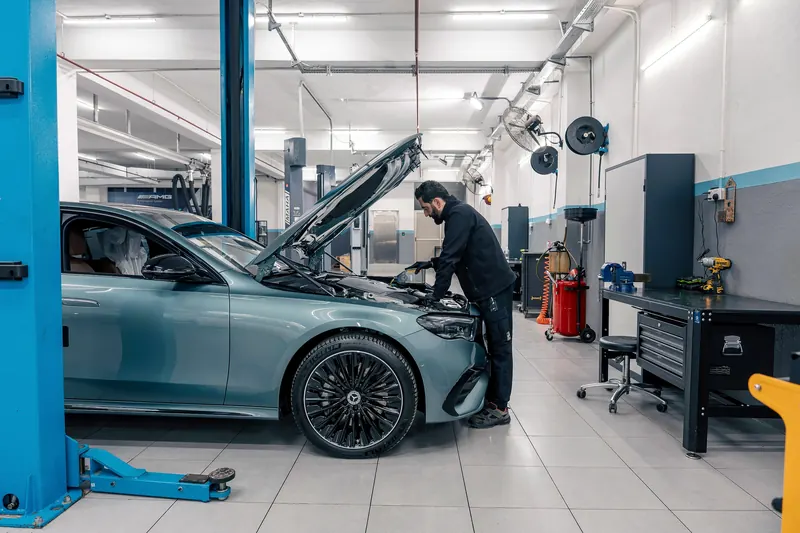
How we worked
Armstrat worked inside the dealership, not at a distance. The engagement was scoped against one agreed outcome: double EBITDA within 9 to 12 months without a major capital injection. Every recommendation was tested against that result, and where the dealership needed a system it could neither buy nor fund, we designed, built and deployed it ourselves.
- 01
Rebuild the numbers from source
Three Armstrat partners went on site to interview the owner, the dealership manager and the head mechanic. We digitized the financial records from source documents into a reconciled P&L and balance sheet across two periods, and traced bank and third-party settlement flows to establish the true cash position.
- 02
Turn capital need into efficiency
We reframed the problem from raising capital to using it better, and organized the answer around three levers drawn from high-performing dealers: a system as the enabling layer, marketing as the fastest payback, and tighter inventory and cash cycles as the highest ceiling.
- 03
Build the target, not assert it
Doubling EBITDA was shown as a bridge: current EBITDA plus the contribution of each lever, to a 2x target. Financing has the highest ceiling but was sequenced last, because it pays only once the system makes operations visible and marketing improves cash generation.
- 04
Give the dealer its own system
We advised against growing through the manufacturer’s system and built a dealer-owned customer platform alongside it. Controlled test uploads showed how the old system really behaved. We mapped 40 of its endpoints and pulled about 7,705 historical job cards into the new customer base.
- 05
Design for the team using it
The dashboard tells staff who to contact now rather than asking them to analyze data. Outreach consent is captured at each visit, campaigns segment by inactivity or profession, and the free-service coupon became the first step of a retention funnel instead of a reimbursement form.
The results
Measured against the outcomes agreed at the start.
- About 7,705 historical service visits, previously unreachable, pulled through 40 mapped endpoints into a segmented, contactable customer base.
- Customer records moved from about 40 contactable entries to a structured database linking each customer to vehicles, service history and outreach consent.
- About 75% of the recommended platform capability delivered and live in production by mid-2026.
- A digitized, reconciled P&L and balance sheet across two comparison periods, where no structured financial baseline had existed before.
- Outreach capability created where none existed, aimed at a warm, repeat-prone customer base at near-zero acquisition cost.
- A 9 to 12 month plan to double EBITDA, built lever by lever as a bridge, that does not depend on a technology investment the business could not fund.
What leaders can take from it
In a capital-intensive small business, the most valuable strategic move is usually the one that consumes no capital. The conventional growth playbook is often the wrong one for the balance sheet in front of you.
Service volume without customer records is revenue that arrives once and cannot be recalled. The most valuable data a business owns often sits in a system it cannot query, waiting for a one-time pull.
Aggressive targets must be built, not asserted. A bridge that shows the arithmetic, and says why the highest-ceiling lever comes last, is what separates a defensible plan from a promotional one.
Questions about this work
How can a dealership grow profit without raising capital?
Grow after-sales before inventory. Service labor and parts margin are a dealership’s real profit engine, and they grow through retention, not more units on the floor. For one authorized dealership, Armstrat built a 9 to 12 month plan to double EBITDA around a dealer-owned customer platform, structured marketing, and tighter inventory and cash cycles, so growth did not depend on a capital raise.
Why does a dealership need its own customer system alongside the manufacturer’s?
Because manufacturer systems are built for the manufacturer’s reporting, not the dealer’s growth. They are rarely configurable and often cannot hold the customer, consent and service data that retention needs. At one dealership, about 7,705 service visits had produced roughly 40 contactable records. Armstrat built a dealer-owned platform alongside the existing system and pulled that history into a contactable customer base.
More work
 $18MRevenue within 14 months, up from $8M
Operating model redesign takes a brand from $8M to $18M
 2.4xgrowth in absolute annual profit within roughly twelve months
Profit up 2.4x for a womenswear brand
 50%Approximate cut in stitching cost after production moved in-house
Phased production insourcing for a womenswear brand

Bring us the hard problem.
We agree the outcomes first, then work inside your business until they hold.