Home · Work · Retail and consumer goods
Insourcing production cut stitching cost about 50% and ended late launches
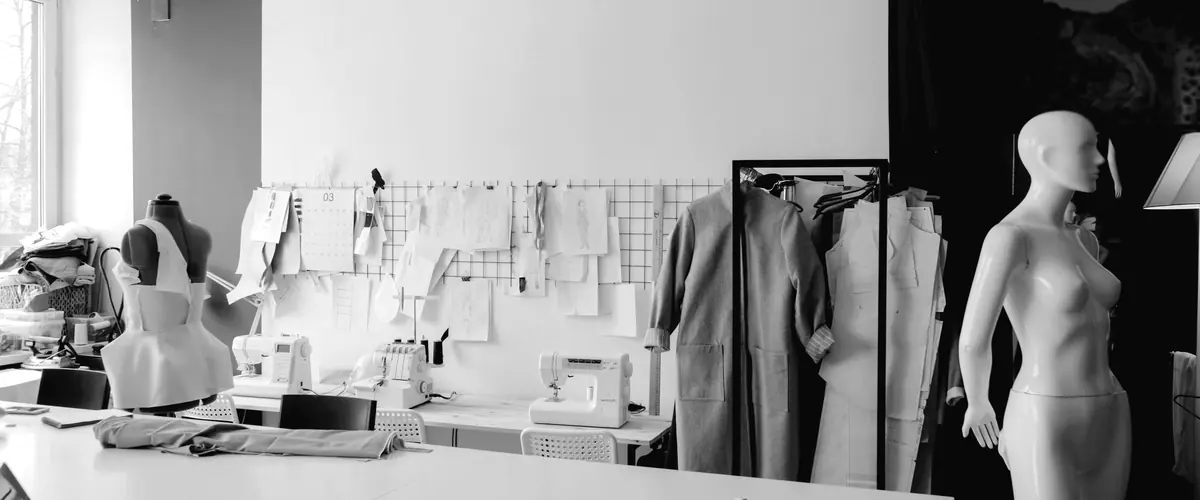
A direct-to-consumer womenswear brand moved production from outside vendors onto its own floor in phases. Stitching cost fell about 50%, launch delays disappeared, and customers ordering the same design received the same product.
- Client
- A direct-to-consumer womenswear brand founded in 2020, with a team of 10 and fully outsourced production at the start
- Engagement
- Operations workstream from 2022: phased insourcing of stitching, packaging, then embroidery and embellishment, alongside ERP and commercial work
- Result
- Stitching cost down about 50%, launch delays eliminated, one quality standard, and no more vendor minimums
- How we worked
- Embedded with ownership and the production manager through hiring, crew replacement and pay design, staying until the floor ran on the brand’s own workforce
Published . Client name withheld.
The situation
The client is a direct-to-consumer womenswear brand, founded in 2020, selling ready-to-wear, festive and unstitched collections online to the highest-spending apparel shoppers in its market. When the engagement began in 2022, it had a team of 10 and no production of its own.
Its entire production base sat with third-party vendors for stitching, embroidery and embellishment, and packaging. As an inexperienced buyer, the brand paid above-market rates, carried vendor margin on every unit and produced to vendor minimums rather than demand. Launches ran about two weeks late. Quality varied between vendors on the same design, which held back repeat purchases in a market where switching costs are close to zero. Ownership could not reconcile the raw material it issued against the finished units it got back.
What made it hard
- Ownership had already ruled out in-house production, assuming it required plant-scale capital spending to match its vendors’ facilities.
- Working capital was tight, with cash already tied up in unsold inventory, so the transition had to largely fund itself.
- Not every step was equally easy to bring in. Stitching is standardized and mechanized; embroidery and embellishment depend on scarce, high-demand artisan labor.
- Master tailors usually arrive with their own crew of stitchers, which creates a single point of dependency and the risk of the whole crew leaving at once.
- A team of 10 had no spare capacity, and operations, ERP and commercial workstreams competed for the same people.

How we worked
Armstrat worked inside the business alongside ownership and the production manager, and scoped the operations work against results ownership could see: lower production cost, on-time launches and one quality standard. We stayed through hiring, crew replacement and pay design until the production floor ran on the brand’s own people.
- 01
Challenged the capital spending assumption
Ownership had benchmarked in-house production against its vendors’ plant scale. We sized stitching machinery to the brand’s actual volume instead. Because standardized cuts across unstitched and ready-to-wear lines made stitching the easiest step to replicate, the investment was modest and well inside available cash.
- 02
Sequenced insourcing by replaceability
We said no to full vertical integration in one move. Stitching came first, packaging next at negligible cost, and embroidery and embellishment last, ordered by capital intensity and how easily each step could be replaced. Deferring the scarce artisan work was the right call.
- 03
Seeded the floor, then diluted dependency
Finding the right master tailor took about three to four months. Some hires overstated their skill and wasted material; others were capable but too expensive for the volume. The chosen tailor’s crew got the floor producing fast, then the production manager replaced stitchers one by one with direct hires.
- 04
Kept the operating model simple
Artisan and stitcher pay was tied to output rather than a fixed wage, managed by the production manager with simple arithmetic. We deliberately said no to activity-based costing and time-stamped routing at this stage. The operating model had to stay as simple as the business.
- 05
Brought artisan work in last
With stitching and packaging running, the brand procured machines and recruited artisans under a recruitment and retention policy built for a scarce labor pool. Headcount grew from 10 to about 25 over the engagement, almost all of it in production.
The results
Measured against the outcomes agreed at the start.
- Stitching cost fell about 50%, as vendor margin disappeared and above-market rates were corrected.
- Production delays fell from about two weeks to one week once stitching moved in-house, then disappeared entirely once embroidery and embellishment followed.
- Quality standardized across designs. One production floor working to one standard ended the same-design variance that was driving negative word of mouth.
- Vendor minimum order quantities no longer applied, so the brand could produce to actual demand, the precondition for the demand-planning model built in the commercial workstream.
- Revenue grew about 1.9x over the engagement while headcount went from 10 to about 25, almost all of it production staff.
- Revenue per head fell about 23%, by design, as vendor margin turned into payroll and gross margin moved inside the business.
What leaders can take from it
Benchmark capital spending against your own volume, not your suppliers’ plants. The objection to in-house production was a category error; machinery sized to actual output made the move affordable immediately.
Sequence insourcing by replaceability, not cost alone. Stitching was both a large cost line and the easiest step to standardize, which is why it paid back fastest. Deferring artisan work was the right call.
A crew that arrives as a unit transfers dependency rather than removing it. Gradual, individual replacement is what turned a master tailor’s network into the brand’s own workforce.
Questions about this work
When should a fashion brand bring production in-house?
When vendor margin, late launches and inconsistent quality cost more than running your own floor, and you can size machinery to your own volume rather than a vendor’s plant. For this womenswear brand, Armstrat started with stitching because it was standardized and a large cost line. Stitching cost fell about 50% and launch delays were eventually eliminated.
Does revenue per employee fall when you insource production?
Usually yes, and by design. Insourcing converts vendor margin into payroll, so headcount rises faster than revenue while gross margin moves inside the business. At this womenswear brand, headcount went from 10 to about 25 while revenue grew about 1.9x, and revenue per head fell about 23%. Armstrat measured the work on stitching cost, launch timing and quality instead.
More work
 $18MRevenue within 14 months, up from $8M
Operating model redesign takes a brand from $8M to $18M
 2.4xgrowth in absolute annual profit within roughly twelve months
Profit up 2.4x for a womenswear brand
 5 monthsApproximate time to the first accurate, graded inventory in the brand’s history
Stock counted, graded and connected in about five months

Bring us the hard problem.
We agree the outcomes first, then work inside your business until they hold.