
Home · Work · Manufacturing and industrial
A stone manufacturer shed freight cost and rate risk, and buyers still said yes
A stone manufacturer carried the full freight cost and rate risk on every export order. Armstrat tendered freight to more than 50 providers, moved buyers to FOB and cut an inland routing leg.
- Client
- A natural stone products manufacturer and exporter with multi-site production and a heavy inland and export freight load
- Engagement
- Freight and logistics cost optimization: a competitive freight tender, a change of export terms and a redesign of inland routing
- Result
- International freight cost, rate risk and in-transit liability moved off the business, an estimated 10 to 15% better rates on tendered lanes and one inland routing leg eliminated
- How we worked
- Inside the business from shipping data to negotiated partner terms and a relocated team, scoped around freight cost, risk carried and cash tied up
Published . Client name withheld.
The situation
The client manufactures and exports natural stone products and carries an unusually heavy logistics load for its size. Raw marble blocks travel from mines to processing facilities, then between facilities for sequential processes, often in both directions more than once, before leaving as export shipments.
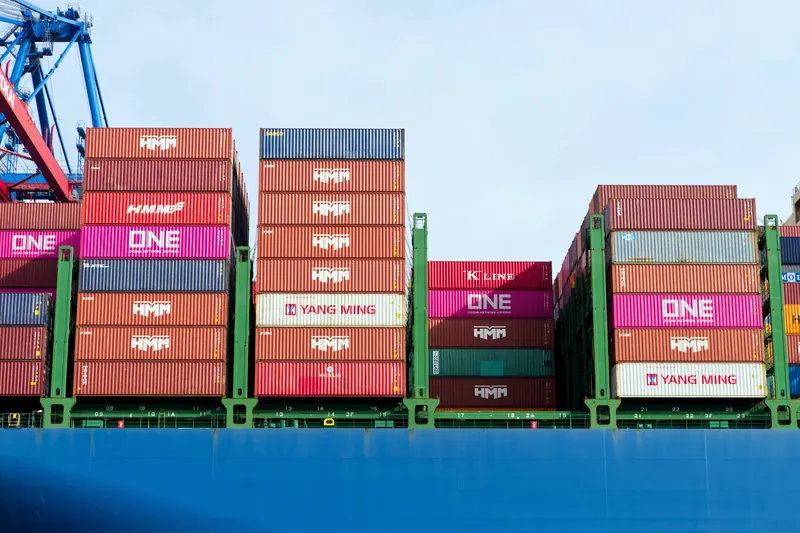
Selling delivered duty paid (DDP) at one landed price, the manufacturer carried the freight cost, the rate risk between quote and shipment, in-transit damage liability and the cash to fund freight upfront. Through 2022, container rates spiked and stayed volatile while the local currency fell sharply against the US dollar, so it often quoted at old rates and paid new ones. It had no structured way to buy, route or consolidate freight, and had never analyzed whether its inter-facility moves were necessary.
What made it hard
- Stone is dense, heavy, fragile and irregular: expensive to move and hard to protect. Rates were so volatile that a fixed-rate contract carried as much risk as spot exposure, so locking in rates was not the answer.
- Buyers preferred DDP because it gave them a single landed cost. The manufacturer had offered free on board (FOB) terms before and buyers had declined, so simply offering them again would have failed.
- A competitive rate meant committing to a minimum volume the business might not deliver if the move to FOB fell short.
- Inter-facility movement is built into a multi-site production process and cannot simply be removed. One leg existed only because three craftsmen performing one marble process worked at a third location, and moving them meant housing, wage adjustment and the risk that they would refuse.
- Shipment volumes were regular but lumpy, varying substantially month to month, so monthly cost comparisons pointed to the wrong conclusions.
How we worked
Armstrat worked inside the business through execution, from the shipping data to negotiated partner terms and a relocated team, rather than handing over a recommendation. The work was scoped around results the manufacturer could see in its own numbers: what it paid to move stone, the freight risk it carried and the cash it tied up in freight.
- 01
Profile every shipment before negotiating
We built a freight profile from historical shipping data across all product categories, covering weight, dimensions, volumetric weight, container types booked and lane history. We then overlaid the forward commercial strategy, so the tender targeted the lanes and regions the business would actually ship to.
- 02
Tender freight to 50+ providers
We issued a structured request for quotation to more than 50 forwarders, direct carriers and third parties, found through network and targeted search. Respondents were screened on rate, service professionalism and their ability to handle export customs clearance, not on rate alone, and we ran the evaluation to selection.
- 03
Change the offer, not just terms
Buyers had refused FOB once, so we changed what came with it. The selected forwarder became the official shipping partner, offering buyers the negotiated rate from port to door. We waived its referral commission and passed that to buyers as a lower rate, keeping the manufacturer out of the transaction.
- 04
Commit volume at a genuine floor
We negotiated the rate against a committed minimum volume. That gave buyers pricing they could not get on their own, and the minimum was sized to survive the FOB shift underperforming, so the commitment worked as downside protection rather than a bet.
- 05
Move the people, not the stone
We treated inter-facility movement as a network design question, weighing the yearly cost of the extra leg against relocating the three-person team, including housing and wages. Lumpy volumes made monthly figures misleading, so we judged it annually. We relocated the team and scoped a transport management module to systematize freight.
The results
Measured against the outcomes agreed at the start.
- Moved international freight cost, rate volatility exposure and in-transit damage liability off the business entirely by changing export terms from DDP to FOB.
- Released the working capital that had been tied up funding freight upfront on every order.
- Buyers accepted FOB at scale despite their stated preference for DDP, because the nominated partner rate was better than anything they could source on their own.
- An estimated 10 to 15% rate improvement on the negotiated lanes, against an arrangement that had never been benchmarked. The minimum volume was met, so the rate held and the downside protection was never needed.
- Eliminated an entire inland routing leg by relocating three people instead of moving material to them, so stone now travels directly from the mines to the downstream facility. The lead craftsman, who had trained the other two, was retained and remains with the business. One team member declined to relocate and was replaced.
- An estimated 1 to 2 percentage points of the 10 point EBITDA margin expansion delivered across the wider engagement.
What leaders can take from it
Incoterms are a cost structure decision, not a contract detail. One change from DDP to FOB removed freight cost, rate risk, damage liability and a working capital drain at the same time.
An objection buyers have already refused will be refused again unless the offer changes. FOB alone had failed. FOB plus a rate buyers could not get elsewhere, cut further by the waived commission, succeeded.
Sometimes the cheapest way to move goods is to move people. No freight negotiation would have found a leg that existed only because three craftsmen were in the wrong place. Relocation failed a monthly test and passed an annual one.
Questions about this work
How can an exporter move buyers from DDP to FOB without losing orders?
Change the offer, not only the terms, because buyers who have refused FOB once will refuse it again. In an Armstrat engagement, a natural stone manufacturer and exporter tendered its freight, named the winning forwarder its official shipping partner and passed the forwarder’s commission through to buyers as a lower rate. Buyers accepted FOB at scale because the partner rate beat anything they could source themselves.
When does it make sense to relocate staff instead of paying to move freight?
When a routing leg exists only because of where people work, and the annual numbers favor moving them. Armstrat found a stone manufacturer sending material to a third location solely because three craftsmen performing one process were based there. Compared annually rather than monthly, relocating the team, with housing and wage adjustment, beat the cost of moving the material. The leg was eliminated and the lead craftsman stayed.
More work
 +10 ptsPercentage points of EBITDA margin, against a mandate to hold flat
Growth strategy that added 10 points of EBITDA margin
 30%Approximate reduction in electricity use, with no new machinery bought
Lean operations across three stone plants, zero CapEx
 6 monthsto estimate order cost and lead time from production data
Custom ERP and true order costing for a stone manufacturer

Bring us the hard problem.
We agree the outcomes first, then work inside your business until they hold.